Perennials Forever
Seven Suggestions for
a Lovely,
Low-Maintenance
Flower Garden

Dr. Dixie Dillon Lane

In the semi-desert climate of my childhood, weeding was a thing I only ever read about in books. In our neck of the woods (well, desert), wherever there was not a building or pavement or deliberate landscaping, there was dirt. Just dirt. Nothing grew voluntarily other than tumbleweeds (really!) and other scrubby brush or cacti. So never in my entire childhood did I have to weed a garden.
For my mother, who would have loved to have had a thriving garden, this was a source of sorrow. She occasionally managed to get a scraggly flower or two to take root, and even once grew a few tomato plants. But unlike in her own childhood soil in Georgia, growing things did not thrive in Riverside, California, whether weed or wildflower. There is green in the city, but only through intensive irrigation from the faraway Colorado River — as Riverside’s own river, the Santa Ana, flows only about a foot deep in most places.
Now I live in Virginia, where our river, the Shenandoah, routinely floods its plains and every square inch of empty land seems to contain an explosion of virile plant life, at least in the warmer seasons. This, alas, includes weeds. In Hearth & Field No. 3, we gave you some ideas about ways to use weeds well or at least do something small to combat their growth. But my personal approach to weeds is twofold. In the vegetable garden, I’ve given up on being weed-free – every approach other than elbow grease has completely failed me, and so we do as much weeding as our elbows can handle and let the rest go. But in our flowerbeds, I believe I have found the secret to being weed-free. And that secret is to pack the place with perennials.
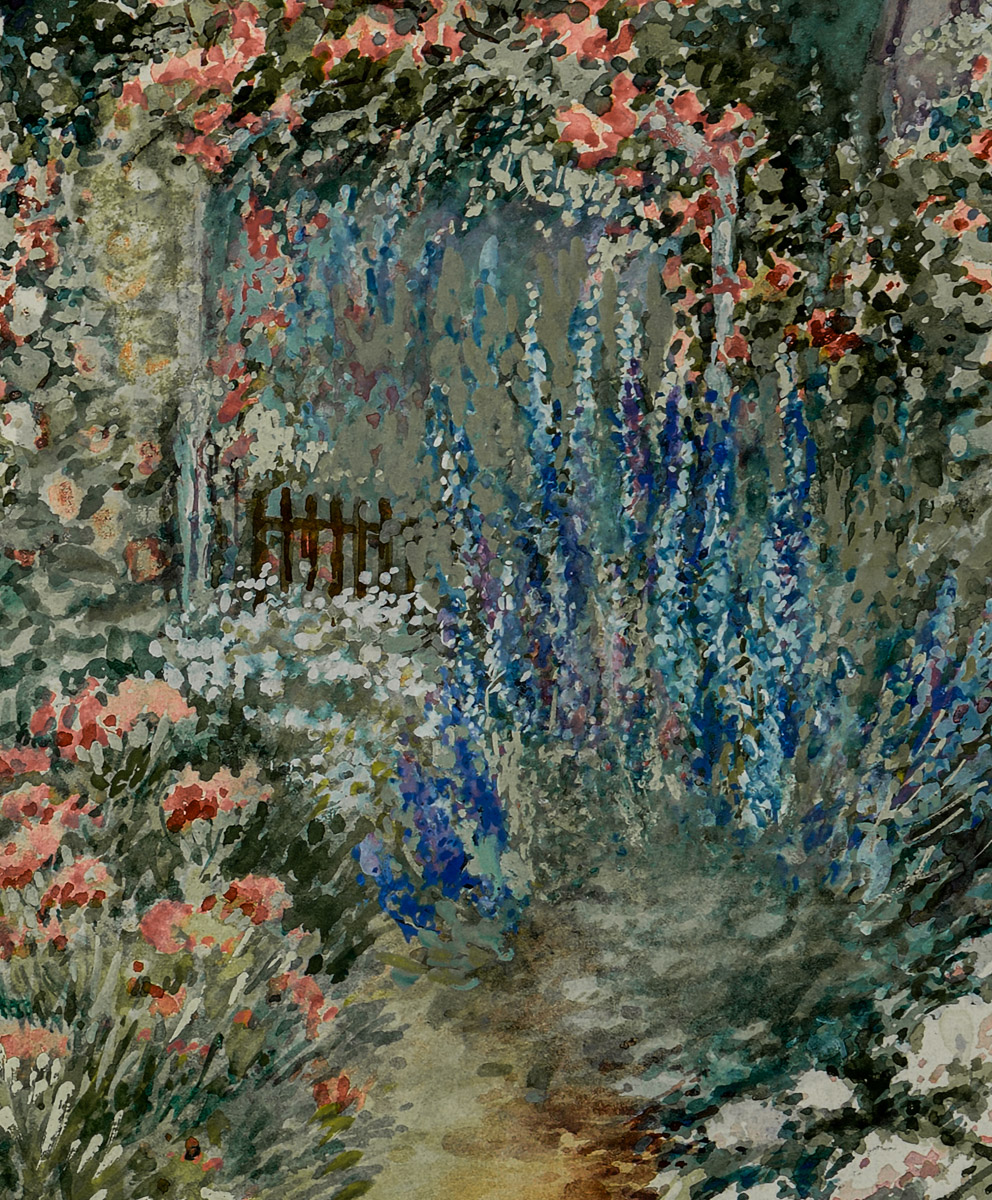
Like you, I love ‘mums and pansies and other such annuals that live for a single season, but they do nothing to control the weeds. Perennials, on the other hand, are the weed-hater’s panacea – year after year, they spread as if by magic, sprouting back up from the winter-worn ground with not a speck of effort from you and, if you’re willing to wait a year or two, effectively choking weeds out of your flowerbeds for good. And as a bonus, they also give you beautiful bouquets for your table throughout the warmer months.
As their name suggests, these perennials seem to grow forever; and thus, the weeds cannot. Here are seven steps to get you started on your weed-free perennial cutting garden.
1. Choose local plants.
The simplest and most effective way to ensure a successful perennial garden is to plant what your neighbors plant. If you choose based on how impressive a flower is rather than on what you see thriving around you or what your local garden center recommends, you’ll end up having to treat plants for bugs and diseases and even possibly cover them in the early spring. This is not the point of a perennial garden.
So, take a walk in your own neighborhood or local mountains and see what seems to thrive locally, and then hie you to the garden center to acquire some of these well-proven plants or bulbs. You will want to purchase odd numbers of plants of each variety (three or five plants together just look better than four or six). If your budget is limited, be satisfied with the number you can afford and realize that they will spread like wildfire in the coming year or two. I began my Virginia cutting garden with purple coneflowers, black-eyed susans, columbines, torch lilies, and yarrow. Both black-eyed susans and yarrow grow naturally in our local mountains, and these have especially flourished; and any kind of coneflower or daisy is a hardy choice in most regions.
You might also buy a few plants specifically for your flowerbed borders. Phlox, candytuft, and sweet alyssum are excellent for this purpose. Crocuses, daffodils, and tulips are nice, too, but neither their blooms nor their greenery will last through the summer. You can also anchor your beds with a pair of flowering shrubs like hydrangea, rose of sharon, or azalea, depending on your USDA garden zone and sun exposure.
2. Leave no space empty.
No matter how many plants you buy, you’ll still have a lot of empty space in the bed for at least your first year. You have two options for filling this space so as to keep down weeds. First, you can mulch heavily between the plants and in any spaces you have not been able to fill. You should expect to still have to do some weeding, but it won’t be nearly as overwhelming as if you do not mulch. Second, you can sow local wildflower seeds in the bigger empty spaces. Some of my favorites to use have been bachelor’s buttons, poppies, larkspur, and milkweed (for the butterflies), but a wildflower mix is also fun. Although such flowers are technically annuals, they self-sow well and often will keep coming up for several years while you wait for your perennials to spread out.
3. Cut frequently.
Many perennials are “cut-and-come-again” flowers; that is, the more you cut the blooms, the longer the plants will flower. So do not spare the garden snips. It is best to cut just above a branching or bud, but the most important thing is to cut flowers as often as you like and not try to save them on the plant.
This is also a wonderful opportunity to share with others. Our neighbor kids know they are welcome to cut our flowers, as do our friends; our cutting garden keeps not only our mantle and table bedecked with blooms in the warmer seasons, but also those of several other families. For a couple of years, we even provided bouquets for the altar of our church each Sunday. While these bouquets were not as spectacular as what the church could have bought from a florist, the task of preparing and placing them was deeply meaningful to us.
4. Don’t tidy up too soon.
After your cutting garden ceases blooming for the season, discipline yourself to leave the stems and leaves intact for a few weeks at least, even as the plants begin to die. Many plants, especially bulbs like lilies and daffodils, will not bloom as well (or at all) the following year if you cut them down before their leaves have gone creamy-brown and dry. So be patient, if you can, and wait until the leaves pull easily away from lilies and the stalks of coneflowers are truly dead. Then you can tidy the bed a bit, if you like, pulling out leaves and cutting stems down to a couple of inches from the ground. Alternatively, you can leave at least some of the plants intact over the winter in order to provide a habitat for beneficial insects like praying mantises, who love to attach their egg sacs to dry stems in overwintering gardens.
5. Label plant locations.
When you cut back your dead plants, and especially when you remove the leaves and stems of bulbs (leaving nothing showing above ground), make sure to mark the spot where the plants grow. Get yourself a bag of popsicle sticks and a permanent marker and mark the crocuses and lilies as you tidy up, or you will have no idea where they are come spring. The same is true for plants whose crowns or leaves are still visible throughout the winter; black-eyed susans and purple coneflowers, I have learned, look almost exactly the same until they bloom, so you’ll have no idea which is which come spring unless you have marked them.
6. Transplant annually.
Why does it matter if you don’t know which plant is which until it blooms? Because it means you can’t transplant them accurately. In the spring, twice as many plants will poke out of the ground as you planted there last year, but many of them will be clumped together. It doesn’t matter much if you miss a year, but most years you will want to dig up and separate some of these, moving them into empty spaces in the beds, keeping in mind any color imbalances within the beds from last year. Do this on an overcast, cooler day, if you can, and water the transplants well. Certain bulbs do better when transplanted in the fall rather than in the spring — ask at your garden center. Either way, you’ll get a fuller garden and help stave off disease if you separate and transplant more-or-less annually.
7. Trade your plants.
While you are transplanting, keep a few empty 4-inch pots and some extra garden soil nearby and pop a few plants into these to trade with neighbors and friends for plants from their gardens. This is a free and easy way to add variety to your beds. It also pairs well with your kids’ lemonade stand. You can also look around in local woods (check with the owners first, of course) for plants that you might pilfer for your garden; one year we found some beautiful purple columbines that way.
With a little patience and a small amount work, these steps will get you to a thriving, weed-free cutting garden in only two or three years. And even along the way you’ll reap the benefits of less weeding and plenty of flowers. Perennials forever!